

Is Sulfhydryl Hydrophobic Or Hydrophilic
Learning Outcomes
- Identify the attributes of molecules with hydroxyl groups
- Identify the attributes of molecules with carboxyl groups
- Place the attributes of molecules with amino groups
- Identify the attributes of molecules with phosphate groups
- Identify the attributes of molecules with methyl groups
- Identify the attributes of molecules with carbonyl groups
- Identify the attributes of molecules with sulfhydryl groups
Functional groups are groups of atoms that occur within organic molecules and confer specific chemical backdrop to those molecules. When functional groups are shown, the organic molecule is sometimes denoted as "R." For instance, ethanol is typically fatigued similar this:

In order to condense the structure and focus on the hydroxyl group (the oxygen and hydrogen jump to the 2d carbon), everything too the hydroxyl group would replaced with an R, equally follows:

Note:R doesn't ever stand for the same organic molecule. It can stand in for an space diversity of molecules.
Functional groups are found forth the "carbon backbone" of macromolecules which is formed past chains and/or rings of carbon atoms with the occasional substitution of an element such as nitrogen or oxygen. Molecules with other elements in their carbon backbone are substituted hydrocarbons. Each of the four types of macromolecules—proteins, lipids, carbohydrates, and nucleic acids—has its own characteristic gear up of functional groups that contributes greatly to its differing chemical properties and its function in living organisms.
Properties of Functional Groups
A functional group tin can participate in specific chemical reactions. Some of the important functional groups in biological molecules include: hydroxyl, methyl, carbonyl, carboxyl, amino, phosphate, and sulfhydryl groups. These groups play an important role in the formation of molecules like DNA, proteins, carbohydrates, and lipids.
Classifying Functional Groups
Functional groups are usually classified equally hydrophobic or hydrophilic depending on their charge or polarity. An example of a hydrophobic grouping is the not-polar methane molecule. Among the hydrophilic functional groups is the carboxyl grouping found in amino acids, some amino acid side bondage, and the fatty acid heads that grade triglycerides and phospholipids. This carboxyl group ionizes to release hydrogen ions (H+) from the —COOH group resulting in the negatively charged —COO– group; this contributes to the hydrophilic nature of any molecule it is found on. Other functional groups, such as the carbonyl group, take a partially negatively charged oxygen atom that may form hydrogen bonds with h2o molecules, once again making the molecule more hydrophilic.
| Table 1. Important Functional Groups in Biology | |||
|---|---|---|---|
| Functional Grouping | Structure | Properties | General Features |
| Hydroxyl | | Polar Hydrophilic | Characterized by presence of H and O Simple structure |
| Sulfhydryl |  | Polar | Characterized by presence of S Uncomplicated branched structure |
| Methyl |  | Nonpolar | Characterized by presence of H and C Elementary structure |
| Carbonyl |  | Polar | Characterized by key C and O Bound to 2 organic side groups Double bail to oxygen increases the polarity |
| Carboxyl |  | Charged, ionized to release H+. Since carboxyl groups can release H+ ions into a solution, they are considered acidic. | Characterized by fundamental C jump to O and OH Acidic |
| Amino |  | Charged, accepts H+ to class NH3 +. Since amino groups can remove H+ from solution, they are considered basic. | Characterized by presence of Northward Branched structure |
| Phosphate |  | Charged, ionizes to release H+. Since phosphate groups can release H+ ions into solution, they are considered acidic. Acidic | Characterized by presence of P Complex construction |
Practise Questions
Fructose is a common sugar that you've probably come into contact with in your life. What functional groups can exist found in a fructose molecule?

Leucine is an amino acid that plays an of import part in muscle development. What functional groups can be found in a leucine molecule?

Hydrogen Bonds betwixt Functional Groups
Hydrogen bonds betwixt functional groups (inside the aforementioned molecule or between unlike molecules) are of import to the function of many macromolecules and aid them to fold properly into and maintain the advisable shape for functioning. Hydrogen bonds are likewise involved in various recognition processes, such as DNA complementary base pairing and the binding of an enzyme to its substrate, as illustrated in Effigy 1.
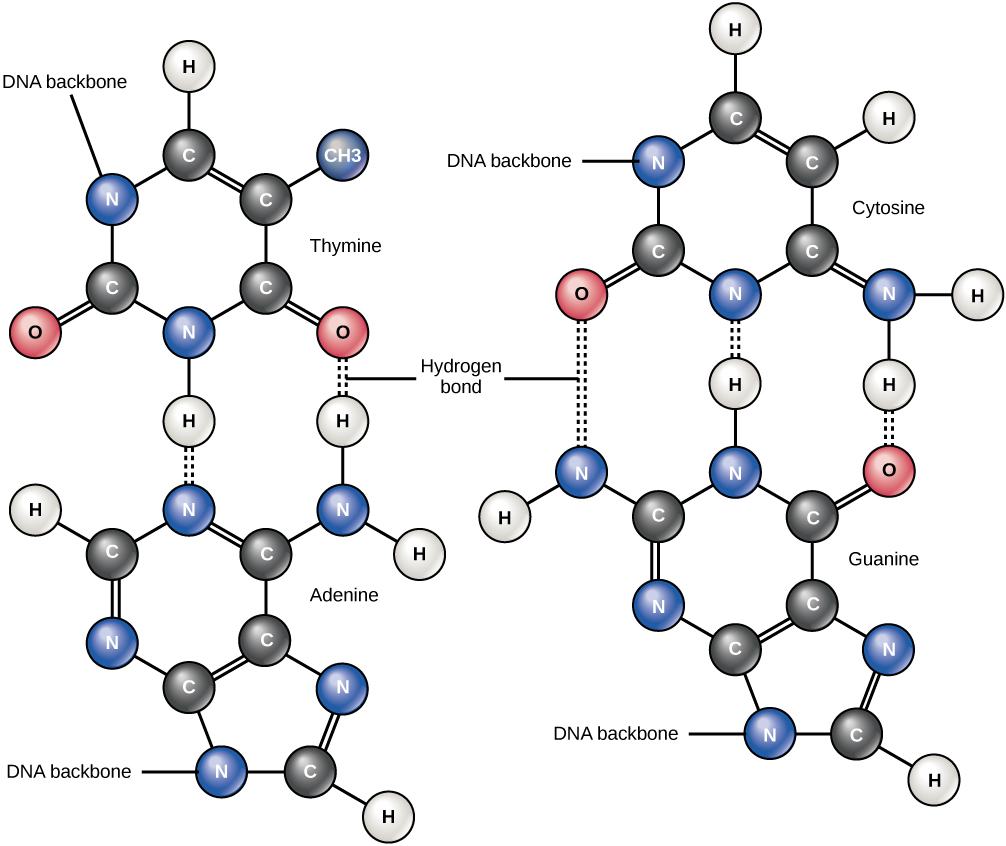
Figure 1. Hydrogen bonds connect two strands of Deoxyribonucleic acid together to create the double-helix structure.
In Summary: Functional Groups
The unique properties of carbon brand it a central part of biological molecules. Carbon binds to oxygen, hydrogen, and nitrogen covalently to form the many molecules important for cellular function. Carbon has four electrons in its outermost shell and can form four bonds. Carbon and hydrogen can form hydrocarbon chains or rings. Functional groups are groups of atoms that confer specific properties to hydrocarbon (or substituted hydrocarbon) bondage or rings that define their overall chemic characteristics and function.
Effort It
Contribute!
Did you accept an idea for improving this content? We'd love your input.
Meliorate this pageLearn More than

Is Sulfhydryl Hydrophobic Or Hydrophilic,
Source: https://courses.lumenlearning.com/wm-biology1/chapter/functional-groups-2/
Posted by: huntcounce.blogspot.com
0 Response to "Is Sulfhydryl Hydrophobic Or Hydrophilic"
Post a Comment